Toddler Stomach Bug at Night: A Solo Parent's Plan
When a toddler is being sick in the night and you’re the only adult in the house, run three jobs in this order: keep small amounts of fluid going, make each bed change take one minute instead of ten, and watch for the dehydration signs that mean it’s time to call the pediatrician. Most stomach bugs are viral and the vomiting usually settles within a day or two. Everything else waits, including your sleep.
Every source below was loaded and read on October 7, 2026. This is a logistics plan, not medical advice: when it and your pediatrician’s nurse line disagree, the nurse line wins.
The first hour: set up a sick station
Between rounds, set the room up once so you aren’t running back and forth all night.
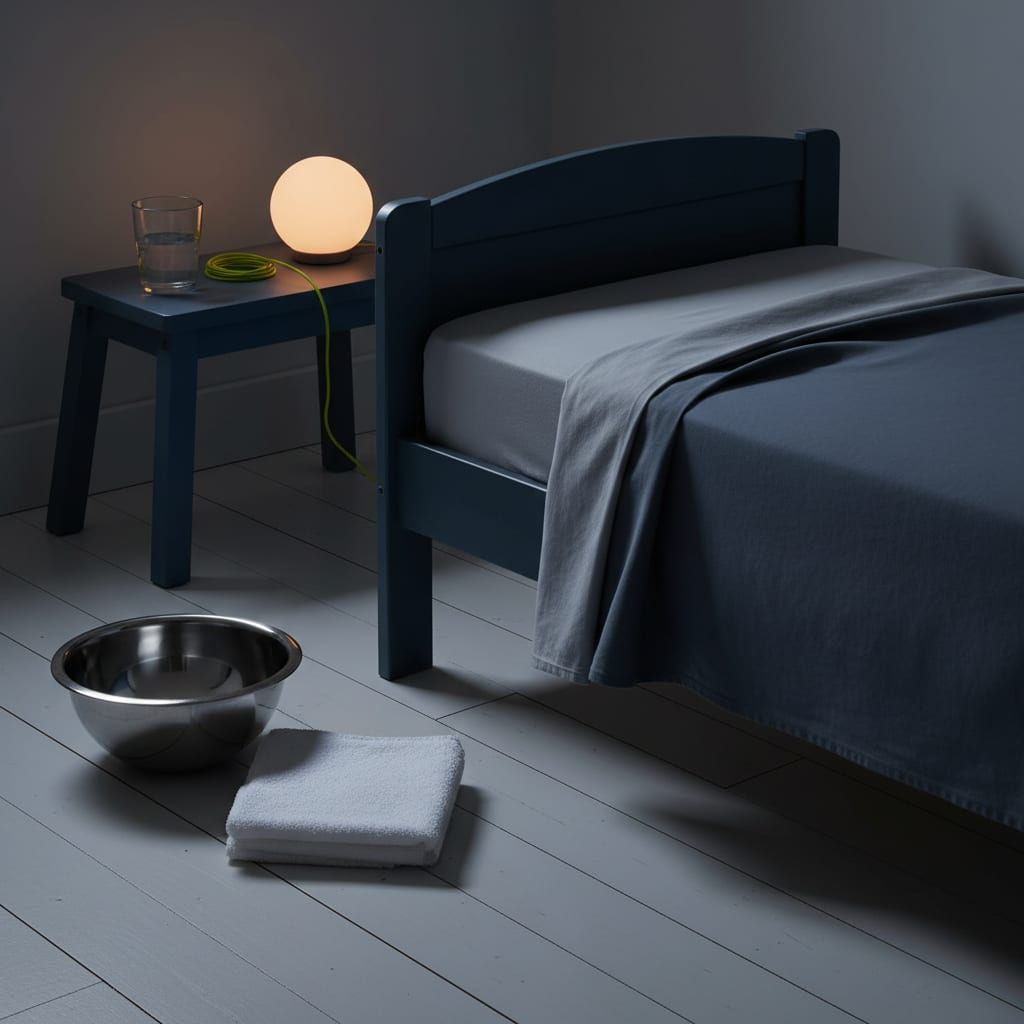
- A bucket or mixing bowl by the bed, and a second one for the trip to the bathroom.
- Two complete bed changes stacked by the door: sheet, blanket, pajamas, a towel.
- A lidded bin for soiled things.
- Fluids and a small cup, or a medicine syringe if your toddler won’t sip.
- Your phone, charged, with the pediatrician’s after-hours number already open.
- Gloves and paper towels in a grocery bag by the door.
Then decide now: you’re sleeping in their room tonight, on a sleeping bag or couch cushions. With two adults, one sleeps while the other listens. With one, being three feet away is how you hear the cough before the vomit and catch it in the bowl rather than the bed.
The two-layer bed (the 3am sheet change in one minute)
Before you lie down, make the bed in two layers: waterproof mattress protector, fitted sheet, then a second waterproof protector and a second fitted sheet on top. When the top layer is hit, peel off the top sheet and the top protector together, drop them in the bin, and there’s a clean dry bed underneath. A crib-size protector like the SafeRest waterproof crib mattress protector fits most cribs and toddler beds. Keep every layer fitted and tight with nothing loose in the bed, and for a baby under 12 months stick to the usual safe-sleep basics: a firm, flat mattress with a fitted sheet.
Do the same with the child: spare pajamas and a towel within reach, so a change happens on the spot, in dim light, with no big wake-up.
Fluids: small, often, and the right kind
The AAP’s HealthyChildren page on treating vomiting says most cases are caused by a virus and get better on their own. The thing to watch is dehydration: for roughly the first 24 hours, keep a child off solid foods and offer small amounts of electrolyte solution (“ask your pediatrician which one”).”
The AAP’s pediatric gastroenterologists put numbers on “small” in Drinks to Prevent Dehydration in a Vomiting Child: small amounts every few minutes over a few hours, aiming for at least 1 ounce (30 ml) an hour. For children 1 and older they list commercial oral rehydration solutions, in liquid form and as popsicles, or apple juice or sports drink diluted half and half with water. They caution that sports drinks can carry a lot of sugar, which can make diarrhea worse.
In practice, at 3am:
- Use a syringe or a medicine cup, not a full sippy cup, so a thirsty toddler can’t gulp.
- Keep a rehydration drink on the shelf before you need it. An unflavored solution such as Pedialyte keeps unopened, and the Pedialyte freezer pops are the version most toddlers will actually take.
- Log what goes in and comes out. One phone note with the time of each vomit, drink and wet diaper. By 4am you won’t remember the count.
The treating-vomiting page is also clear: no over-the-counter or prescription remedies unless your pediatrician has prescribed them for your child and this illness.
When to call: the line you’re watching for
Decide now what would make you pick up the phone. HealthyChildren’s list of signs of dehydration in infants and children is the checklist. It says to notify the pediatrician immediately if any of these develop:
| Watch for | What it looks like at night |
|---|---|
| Peeing less | Fewer wet diapers than usual, or a dry diaper across several hours |
| Dry mouth | Parched, sticky lips and tongue |
| Fewer tears | Crying without tears |
| Playing less, or excessive sleepiness | Hard to rouse, not just tired |
| Very fussy, sunken eyes, cool discolored hands and feet | Listed under severe dehydration |
The same page set says to call your child’s doctor right away if your child is too sick to drink or becomes lethargic, and to call if they can’t keep any clear liquids down or the symptoms get worse. The NHS treats vomiting blood, green or yellow-green vomit, severe difficulty breathing, or a child who is confused or not responding as usual as emergencies. In the US that means 911. Alone, nobody can watch the back seat while you drive, so for a child that sick, call. If you’re unsure which side of the line you’re on, call the after-hours nurse.
The solo part: handoffs, work and the second wave
If a handoff is due, text the other house as soon as you know, with facts only: when it started, how many times, last drink, last wet diaper, and whether you’re keeping them or they’re coming. The schedule-change scripts work as written. Whichever house the child is in, send the phone note with them.
Plan for two days off, not one. The NHS page on diarrhea and vomiting advises staying off school or work until there has been no vomiting or diarrhea for at least 2 days. CDC’s norovirus prevention guidance tells anyone who has been sick not to prepare food or care for others until at least 2 days (48 hours) after symptoms stop, and says the virus can stay in stool for two weeks or more. Your daycare’s own policy is the rule that applies, so check it and tell your manager on the first morning.
Clean like you’re next. The same CDC page says hand sanitizer doesn’t work well against norovirus and is no substitute for soap-and-water handwashing. It says to glove up, wipe vomit with paper towels, disinfect with a chlorine bleach solution of 5 to 25 tablespoons of household bleach per gallon of water left on at least 5 minutes, and wash bedding hot on the longest cycle, then dry on high heat. If it started in the car, Betteroo’s walkthrough on getting vomit out of a car seat and upholstery covers the harness (surface-wash only, never bleach), and your seat’s manual has the last word.
Then assume you’ll catch it. In a one-adult house the second wave lands on the only person on duty. Restock the rehydration shelf and set up your backup ask now, while you can still type. The plan for solo parenting when you’re the sick one picks up from there.

Afterward: getting sleep back
A stomach-bug night leaves habits behind: you on the floor, a slipped bedtime, night drinks. Don’t fight them while they’re ill. Once they’ve had a couple of normal days, ease back to your usual bedtime and routine over a few days, and walk yourself back out of the room over a few nights. Betteroo’s guide to sleep through and after an illness says the same: pause sleep training while they’re unwell, then ease back once they’re clearly better. If they split nights between two houses, restart the same bedtime in both; two homes, one bedtime explains why.
FAQ: a toddler’s stomach bug at night
Should I wake my toddler to give fluids? Ask your pediatrician. The AAP guidance frames fluids as small amounts often, and fewer wet diapers than usual is a reason to call, not to wait.
Can my toddler drink water? For children 1 and older, HealthyChildren lists oral rehydration solutions and half-strength juice or sports drink, because vomiting loses electrolytes too. Ask your pediatrician which they prefer.
When can my toddler eat again? HealthyChildren describes a liquid diet for about 12 to 24 hours in most cases. If there’s diarrhea too, ask your pediatrician how to bring solids back.
How long does a toddler stomach bug last? The NHS says vomiting usually stops within 1 or 2 days and diarrhea within 5 to 7. Vomiting that keeps going, or a child who can’t keep clear liquids down, is a reason to call the pediatrician.