Solo Parenting When You're Sick and Have No Backup

When you’re sick and you’re the only adult, the job stops being parent well and becomes keep everyone safe, fed, watered and asleep for twenty-four hours. That’s four moves: collapse the house to one room you can supervise lying down, drop food to whatever needs no cooking, move bedtime earlier rather than later, and make one specific ask of one specific person before you’re too far gone to type it. Everything below is the detail, including the parts nobody writes about: the night shift and the work day.
The first twenty minutes
There’s usually a short window between “I don’t feel right” and “I can’t stand up.” Spend it setting up.
Build base camp. Pick the room where you can lie down and still see the kids — the living room floor, not your bed. Bring in water, a bucket, the charger, medicine, a blanket, snacks; with a toddler, make it the room you can gate. Fill several bottles while you’re up, because getting up at 3am for a drink turns one bad day into two.
Send the ask now, not tonight when it’s bad. Wording is below; send it while you can still hold a phone.
Do a sixty-second safety sweep. Door locked, stairs gated, medicines up high, stove off. You’re about to be a far less attentive adult, and that minute buys it back.
Lowering the bar without lowering the floor
The floor is short and genuinely non-negotiable: nobody gets hurt, everybody drinks, everybody sleeps, prescriptions and inhalers happen on time, the door is locked.
Everything else is above the floor — bath, homework, a cooked dinner, screen limits, a tidy house — and all of it can go for a day. So cereal for dinner is dinner, and a movie in the afternoon is a supervision tool, not a moral failure: you’re trading screen time for the ability to keep your eyes shut while staying in the room.
If every week feels like this one, that’s a different problem — the burnout reset covers it honestly, including the part where nobody’s coming.
Nights when you’re sick and they still wake
This is the half the general advice skips, because it assumes somebody else takes the night.
Move bedtime earlier, not later. Letting the evening drift so you don’t have to fight anyone backfires: an overtired kid protests longer and wakes more.
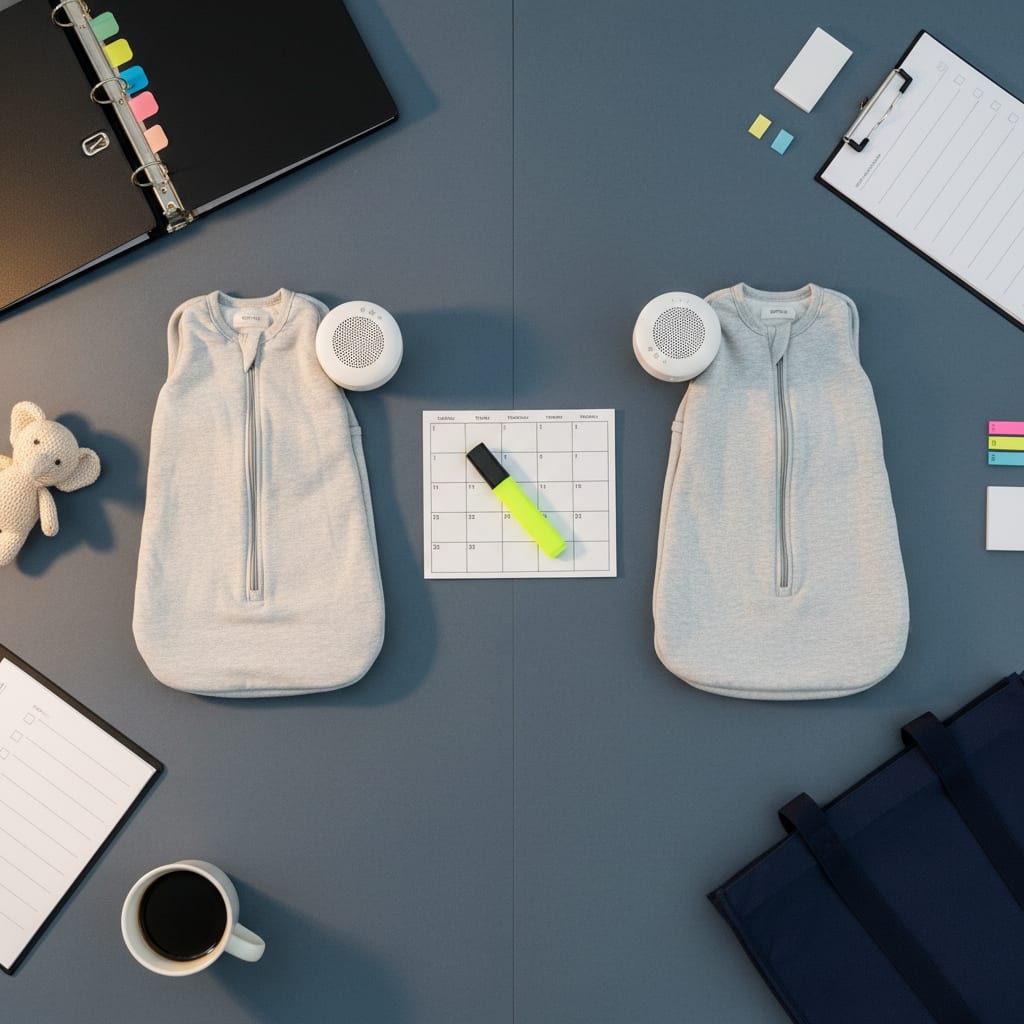
Pre-stage the night before you lie down. Water by their bed, night light on, and layer the mattress — waterproof cover, sheet, second cover, second sheet — so a 2am accident is a thirty-second strip-and-drop, not a full bed change while you’re shaking.
Run the routine identically even though you’re running it badly. Sameness does the settling, and it survives being delivered by someone with a fever.
If they’re sick too, expect worse before better — congestion, fever and wrecked naps all push against the schedule at once, and the answer is comfort rather than a new plan. Betteroo’s guide to what illness does to a child’s sleep is a sane starting point for how far to loosen and for how long.
Start nothing new. No sleep training, no room move, no dropping a nap while you’re ill. A half-done attempt is worse than none.

Who to ask, and exactly what to say
The usual failure isn’t that nobody helps — it’s asking too late and too vaguely. A good ask is specific, time-boxed and easy to decline: “Can you take Mia from 4 to 7 today? I’ve got a fever and I’m on my own. A no is completely fine.” The permission to decline is what makes people say yes. Work the tiers in order:
- Your co-parent. An extra afternoon is a logistics request, not a custody concession, and usually the fastest yes — the BIFF-style scripts are built for exactly this message. Some parenting plans also carry a right-of-first-refusal clause about offering extra time to the other parent before arranging other care. Read your own order rather than anyone’s summary of it, and ask a family-law attorney if the wording isn’t obvious.
- Your two-name list. Not your contacts list — the two people you’d actually call at 6am. If you don’t have two names, build them before the next illness; a village from day one is the slower version of this post.
- Paid help. Three hours of a sitter costs less than a sick day taken badly. Your state’s child care resource and referral agency, listed on Childcare.gov’s state resources page, beats a message board.
- 211. A free nationwide referral line for community services — underused, and it exists for the week where every tier above comes back no.
Work, income and the days you can’t afford to lose
A solo income makes an ordinary virus expensive, so treat it as its own problem.
The blunt fact is that the US Department of Labor states plainly that “there are no federal legal requirements for paid sick leave.” Whether you’re paid depends on your employer’s policy and on whether your state or city has its own paid-sick-leave law — several do, and they differ enough that a blog summary is worthless. Start at the DOL’s sick leave page, then your handbook, then your state labor department.
Unpaid job-protected leave under the Family and Medical Leave Act is a separate thing with real conditions attached — length of service, hours worked, employer size. Those thresholds are on the DOL’s own pages and I’m deliberately not printing them — that’s exactly the kind of number a blog gets wrong and a reader relies on. Check the source, then talk to HR.
And tell work early, in writing: a 7am message reads as a sick day, an 11am one reads as something else.
The sick kit you build before you need it
Assemble it while you’re well: one grocery run removes every decision from the worst morning of the quarter.
- A thermometer that works for the whole house — one device, not three. The iProven DTR-1221A reads oral, rectal or underarm, so it covers a toddler and you.
- Oral rehydration solution for the kids and for you. It is never in stock at 4am.
- Fever and pain relief in both adult and children’s formulations. Children’s dosing goes by weight, not age — confirm the current dose with your pharmacist or pediatrician every time, never from memory.
- Two freezer meals that need only heat, plus a no-cook shelf: crackers, tinned soup, applesauce, plain pasta, and the spare sheets already layered on the beds.
The last piece isn’t a product — it’s containment. A bug that goes round the house twice is what actually breaks a solo week, so the CDC’s guidance on precautions when you’re sick around others and on preventing norovirus is worth ten minutes before the season starts.
If the nights are hard even when nobody’s ill, the illness is revealing a gap rather than creating one — a free sleep plan matched to your child’s age is a cheaper first move than a consultant. The daytime version is the four-anchor schedule, built to survive a bad day rather than assume a good one.
FAQ: solo parenting through illness
What if I’m too sick to stand and there’s nobody to call? Get everyone into one safe room with water and no-prep food, lock the front door, and lie down where you can see them. If you can’t keep fluids down, can’t stay conscious, or you’re frightened by how you feel, call your doctor’s after-hours line or 911 — being the only adult is a reason to escalate sooner, not later.
Is it bad to let my kids have screens all day when I’m ill? No. For one day it’s a supervision tool, and the alternative — an unsupervised toddler while you sleep — is worse. The rules come back when you do.
Should I ask my co-parent for extra time when I’m sick? Usually yes, and early. Frame it as logistics with a start and end time rather than a favor, and check your own parenting plan for a right-of-first-refusal clause.
How do I stop the whole house getting it? Often you can’t entirely, but you can slow it — separate towels and cups, wash hands often, clean the surfaces everyone touches, and follow the CDC guidance above. With a stomach bug, cleaning matters more than distance.
Anything to do differently next time? Build the two-name list and the sick kit while you’re well — both take an hour, and both are impossible on the day you need them.