Two Homes, One Bedtime: Baby Sleep on a Custody Schedule
Yes, a baby can sleep well across two homes — if both homes run the same sleep plan. The schedule that matters isn’t the custody schedule; it’s the bedtime one. Keep wake windows, the bedtime routine, and the sleep environment consistent between houses, write the plan down so nobody is working from memory, and treat handoff days as high-risk days with an earlier bedtime. That’s the whole system. The rest of this post is how to actually run it with a co-parent — including the version where your co-parent thinks “wake windows” is a wellness scam.
Why two homes wreck sleep (when they do)
Babies don’t care about the parenting plan. They care about predictability: roughly the same nap times, the same bedtime sequence, the same sleep space signals. When those change every two days, you get what sleep researchers politely call “split-schedule drift” and what I call Tuesday.
The failure mode is almost never one bad house. It’s two decent houses running two different plans — a 7:00 bedtime here, an 8:15 bedtime there; a dark room and white noise at mom’s, a nightlight and open door at dad’s. Each version works alone. Alternating between them is the problem, and the baby pays the bill in both houses. Which means both parents do too.
The one-bedtime system
Here’s what has to match between homes, in priority order:
- Bedtime, within 30 minutes. Pick one time and defend it. If the houses disagree, the earlier house wins — an overtired baby is harder for both of you.
- The routine sequence, not the decor. Bath-bottle-book-bed, or feed-song-sleep-sack-crib — whatever it is, same steps in the same order at both houses. The steps are the signal; the bathtub brand is not.
- Wake windows and nap count. Naps drift first and drag bedtime with them. Both homes should be working from the same nap schedule for the baby’s current age — not the one from two months ago.
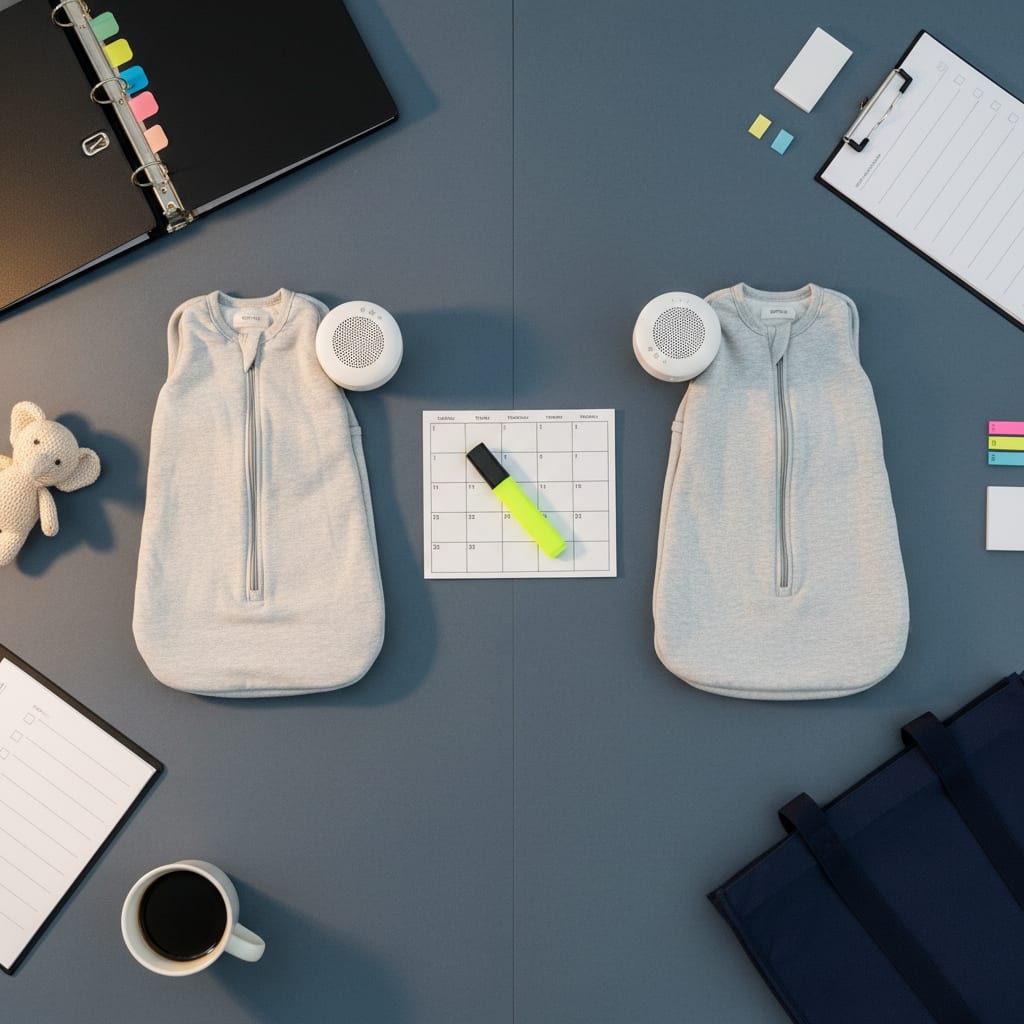
- The sleep environment basics. Dark room, white noise or not, sleep sack or not. Duplicate the cheap stuff so nothing gets forgotten in the handoff bag: two sleep sacks like the HALO SleepSack, two sound machines like the Yogasleep Dohm. Your future 6pm self will thank you.
- The settling method. If one house rocks to sleep and the other does gentle settling in the crib, the baby has to learn two systems. Pick one method both parents can actually stomach and run it in both places.
Write it down (the plan is the peace treaty)
Every co-parenting conflict gets worse when it runs on memory and vibes. Sleep is no exception. What works is a written, shared, boring plan: current wake windows, nap times, bedtime, the routine steps, the settling method, and what to do when a nap gets skipped. One page. Both houses. Update it when the baby’s needs change — which, in the first two years, is roughly every time you’ve just gotten comfortable.
This is exactly the job I’d hand to Betteroo, and it’s the reason this post exists. It’s a personalized baby-sleep app: you answer questions about your baby and your parenting style, and it builds the actual day-by-day plan — today’s nap windows, tonight’s bedtime — and keeps adjusting it as the baby grows through regressions and transitions. For co-parents, that’s the killer feature: the plan isn’t “what mom says” or “what dad remembers,” it’s a neutral third thing both houses can follow. A private sleep consultant runs hundreds of dollars and books out weeks; the quiz that builds your baby’s first plan is free and takes about two minutes:

Balanced verdict, because that’s house policy: it’s a tool, not a miracle. The app can hand both homes the same plan; it cannot make your co-parent follow it, and a baby mid-regression will have opinions no algorithm fully predicts. What it removes is the nightly figuring-out and the “well, I read that…” arguments — which, in a two-household setup, is worth more than the plan itself.
Handoff days are the hard days — schedule around them
Transition days carry the most sleep risk: excitement, car naps at the wrong time, a late dinner at the other house. Three rules that help:
- Hand off earlier in the day when you can. An afternoon handoff gives the baby time to land before bedtime; a 6pm handoff is a bedtime already in progress.
- Move bedtime 20–30 minutes earlier on transition nights. Overtired is the enemy; “slightly early” is free insurance.
- Send the sleep kit, every time. The lovey, the sleep sack, the sound machine if you haven’t duplicated it. A checklist taped inside the diaper bag beats every good intention.
If you’re still choosing the custody rotation itself, the schedule shape matters for sleep too — frequent-exchange schedules like the 2-2-3 rotation keep stretches short (good for attachment with both parents, more handoff days to manage), while week-on/week-off means fewer transitions but longer gaps. And if the duplicate-everything shopping list is making your eye twitch, that’s a budget line, not a crisis — the single-mom budget system has a category for exactly this kind of two-household overhead.
When the other house won’t cooperate
Steady truth: you can only run your own house. If your co-parent won’t match bedtime, keep your side ruthlessly consistent anyway — babies can learn “this is how sleep works here” faster when at least one home never wavers. Share the written plan without editorializing (“here’s what’s been working, in case it’s useful”), lead with the selfish pitch (a well-slept baby is easier at their house too), and let results argue for you. What doesn’t work: turning bedtime into the custody fight’s newest front. The baby sleeps worse in both houses when the parents are at war over how.
FAQ: baby sleep across two homes
Can a baby really sleep well alternating between two houses?
Generally yes — consistency of routine matters more than consistency of address. Babies adapt to two sleep spaces fine when the schedule, routine sequence, and settling method match. It’s two different plans, not two different bedrooms, that causes trouble.
Should both homes have identical sleep setups?
Match the things the baby uses as sleep cues: darkness, sound, sleep sack, and the routine order. The crib brand and wall color don’t matter. Duplicating the small stuff — sound machine, sleep sack, backup lovey — saves the handoff-day scramble.
What if our custody schedule itself is the problem?
Look at the transition count. If sleep falls apart on handoff days specifically, adjust handoff timing before you adjust the whole rotation. If the baby can’t settle all week, the plan mismatch between houses is the likelier culprit — start with one shared written plan, like the one the Betteroo quiz builds.
Who decides the bedtime when co-parents disagree?
If your parenting plan doesn’t specify (most don’t), aim for the earlier proposal and frame it as an experiment: “two weeks, then we compare notes.” A neutral written plan both parents got from the same source is much easier to agree on than either parent’s preference.