Free Things to Do With Kids: The Year-Round List
The reliably free things to do with kids in the US fall into five buckets: your public library (far more than books), public land on fee-free days, museums with free or pay-what-you-wish hours, city and parks-department programming, and store and community workshops. Everything else is a coupon in disguise. This is the year-round version — no venue-hopping road trips, no “free with purchase” fine print — plus the two searches that surface your own town’s list in about ten minutes.
Start with the library (it’s not just books)
The public library is the single highest-return card in your wallet, and most families use maybe a fifth of it. Depending on your system, one free card can get you:
- Museum and attraction passes. Many library systems lend passes to local museums, zoos, and science centers — often one pass per household per month. Ask at the desk or search your library’s site for “museum pass” or “culture pass.”
- A library of things. Telescopes, board games, cake pans, tools, sewing machines, ukuleles, sensory kits. Borrowing beats buying on anything a kid will love for three weeks — the same logic as cost-per-use math, just with a due date instead of a receipt.
- Free programming. Storytime for toddlers, LEGO clubs, teen game nights, summer reading with actual prizes, homework help. It’s staffed, indoors, and weatherproof — which matters more than it sounds when you’re the only adult.
- Free digital everything. E-books, audiobooks for the car, kids’ streaming and learning apps, and in many systems free or discounted access to online courses.
If you do one thing from this post: get every kid their own card this week, and ask the children’s librarian what’s on the calendar. They will tell you things the website never surfaces.
Public land and fee-free days
The National Park Service holds several fee-free days each year — dates are announced on nps.gov and vary annually, so check before you plan around one. Separately, the Every Kid Outdoors program gives US fourth graders a free annual pass covering entry for their whole vehicle to federal lands for the school year; you print the paper pass at everykidoutdoors.gov. If you have a rising fourth grader, that’s a full year of free days out.
Most state parks charge little or nothing for day use, and county and metro park districts are usually free outright — including the nature centers, which run free naturalist programs, junior-ranger-style badge trails, and animal talks that keep kids busy far longer than a playground does.
Museums, zoos, and free hours
Three patterns to look for in your area:
- Recurring free hours. Many museums run a free evening or a free first-Sunday. Check the “visit” or “admission” page rather than the homepage.
- Pay-what-you-wish admission. Common at art museums; “suggested” is not “required,” and staff are used to it.
- Bank and employer perks. Some credit-card issuers offer free museum weekends, and plenty of hospitals, universities, and large employers hold family days. Worth asking HR once.
Also: institutions with an EBT/SNAP card discount program are more common than families realize — a nationwide network of participating museums, zoos, and science centers offers deeply reduced or free admission on presentation of a benefits card. If that’s your situation, search the museum’s name plus “EBT” before you assume you can’t afford the trip.
The free stuff that repeats every month
- Home improvement store kids’ workshops — free, hands-on, monthly at many locations, with a take-home project. Registration fills fast; check the store’s site.
- Bookstore storytimes — weekly at most big-chain and indie bookstores, plus author events for older kids.
- Bowling and movie programs — a handful of national programs offer free summer kids’ bowling games or cheap summer movie mornings; the games are free but shoe rental and concessions are not, so budget the extras or bring snacks from the weekly grocery run.
- Fire stations, police open houses, and airport viewing areas — call ahead for the first two; the third costs a parking fee at most and buys an hour of genuine awe from a 4-year-old.
- Farmers markets — free live music and free samples are a legitimate Saturday activity, no purchase required.
Season by season, when you’re out of ideas
Fall: leaf-collection walks, high school football and marching band (usually free for kids or a couple of dollars), library harvest programs, corn-maze-free apple orchards that don’t charge for walking the grounds.
Winter: free ice-skating days sponsored by cities, holiday light displays you drive through, museum free days when everyone else is shopping, and the ultimate solo-parent play: an indoor mall or rec-center walk when it’s too cold to be outside and too early to go home.
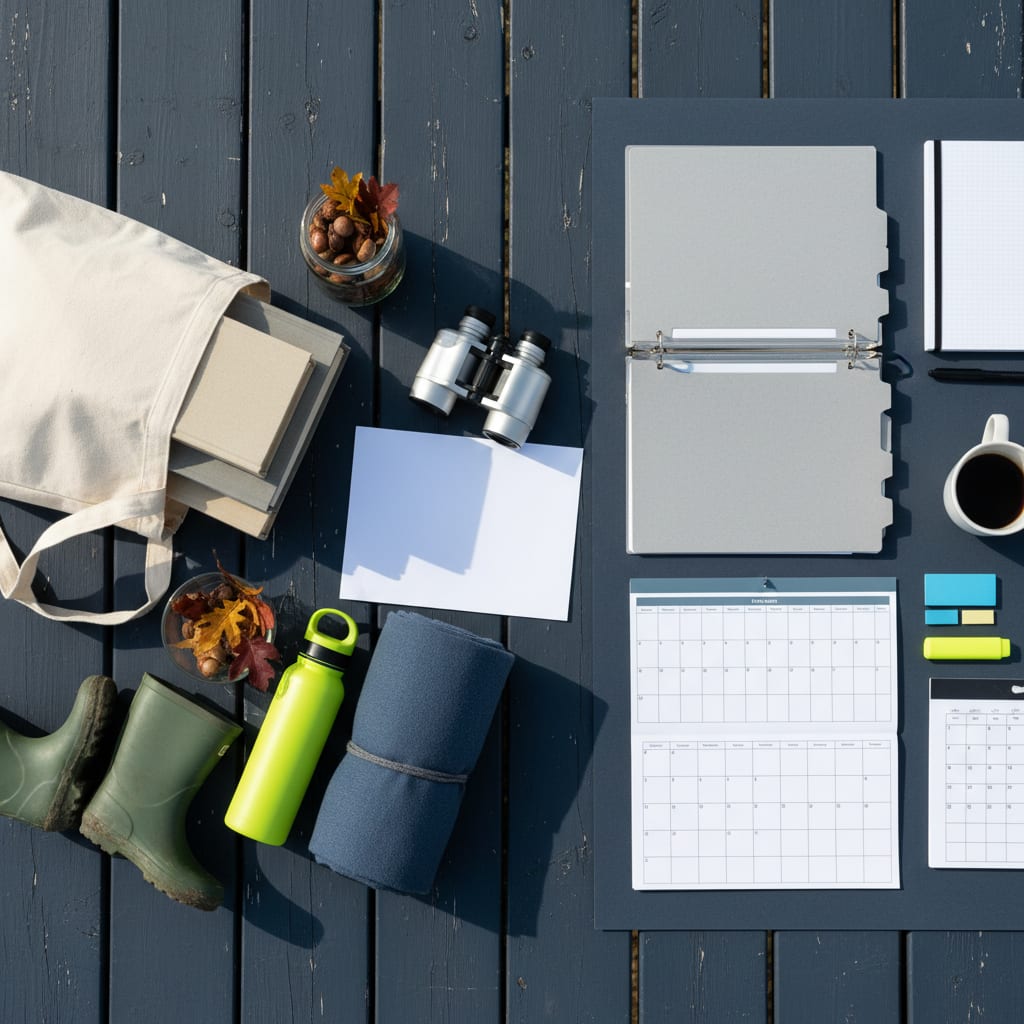
Spring: county park nature programs, community garden work days, free youth clinics run by parks departments before spring sports start, and the reliable one — puddles, boots, an hour.
Summer: splash pads, free concerts in the park, summer reading, library maker programs, and public pools (many run free or $1 days). Summer is also when free birthday-adjacent venue options exist, which pairs well with a birthday plan built on real numbers.
The two searches that find your town’s list
Ten minutes, twice a year, beats scrolling forever:
- Search your county or city parks department site for “programs” and “calendar,” then subscribe to the email list. Municipal programming is the most underused free resource in the country.
- Search “[your city] free family events” plus your local library’s events page, and add whatever you find to the same calendar you use for the weekly routine. Unscheduled free activities don’t happen; scheduled ones do.
One caution: verify hours, dates, and registration before you load kids into a car. Free programs change schedules more often than paid ones, and a locked door at the end of a 20-minute drive is a rough afternoon for everybody.
FAQ: free activities with kids
What can I do with kids when it’s raining and we have no money?
Library first — it’s free, indoors, and staffed. After that: a rec-center open gym, an indoor mall walk with a scavenger list you write in the car, a museum free hour, or the home version — a blanket fort plus a box of borrowed library board games. Rainy days are exactly what the library-of-things collection is for.
How do I find free things to do with a toddler specifically?
Ask for the library’s baby and toddler storytime schedule, then check your parks department for “tot time” or indoor open-play sessions at rec centers. Toddlers need a safe enclosed space more than they need programming, and municipal indoor play sessions are usually free or a couple of dollars.
Are national parks ever free?
Yes — the National Park Service designates several fee-free days each year, and the dates are posted on nps.gov. Fourth graders can also get a free annual pass through Every Kid Outdoors, which covers everyone in the vehicle. Many parks charge no entrance fee at all, year-round.
How do I keep “free” outings from costing money anyway?
Decide the extras before you leave: pack water and snacks, park where parking is free, and set the gift-shop rule out loud in the car. The activity is rarely what costs money — the drive-through on the way home is.