Our Grocery Budget for 3: Real Receipts, Real Math
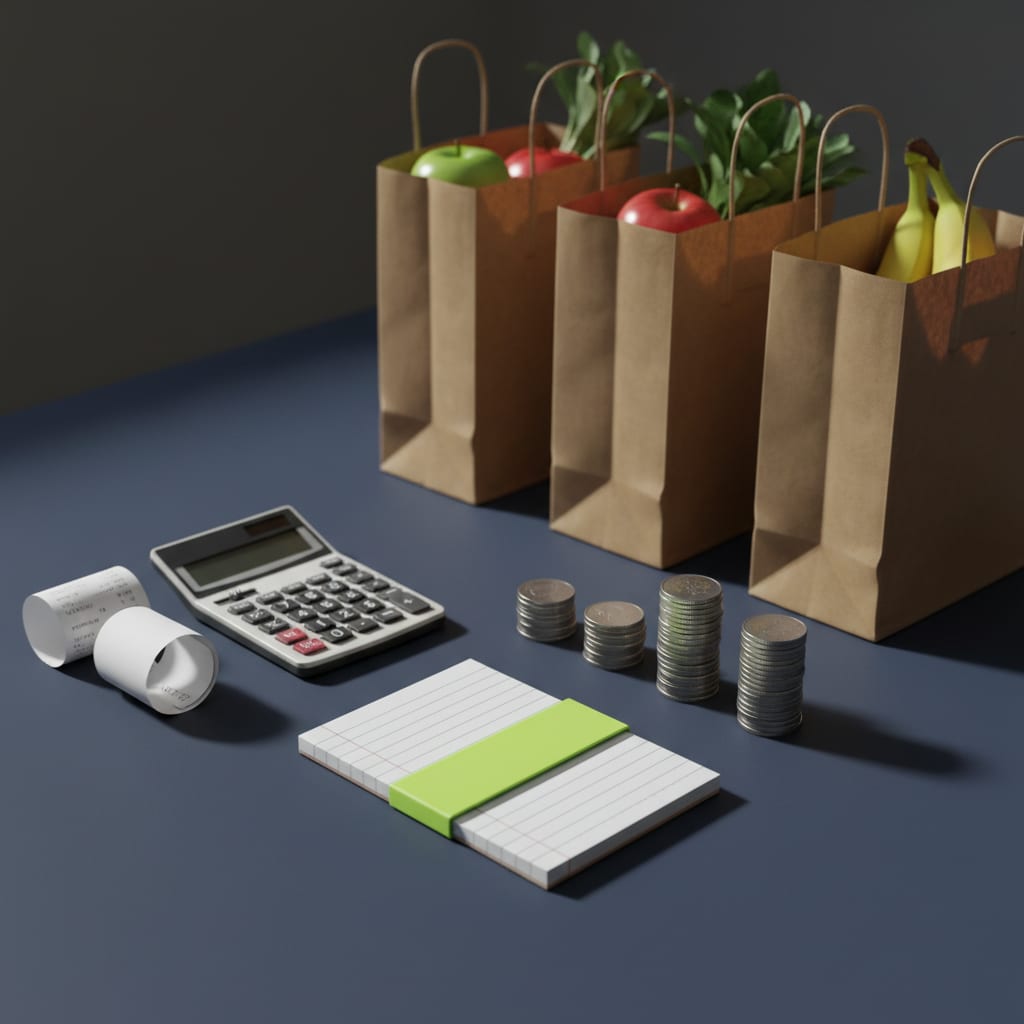
A realistic grocery budget for a family of 3 — one adult, two kids — lands around $500–$650 a month in most of the US right now, and ours runs about $130 a week in Columbus, Ohio. But the number isn’t the system, and copying someone else’s number is exactly how grocery budgets fail. This post is the math that produces the number: how to find your real baseline, the price-per-week framework that actually controls the total, and the three systems that keep it from creeping back up. No recipes — this is the money layer, and it works no matter what you cook.
Step 1: find your real baseline (two weeks of receipts)
You cannot budget from a guess, and everyone’s guess is low. For two weeks, keep every food receipt — grocery runs, the gas-station milk, the “just picking up a few things” trips that are never a few things. Add it up, divide by two: that’s your true weekly baseline. Mine was an unflattering surprise the first time, mostly because the small trips, not the big hauls, were doing the damage. If you want an outside benchmark, the USDA publishes monthly food-plan cost tables by family size at several spending levels — look up the current figures at fns.usda.gov rather than trusting any blog’s memory of them, mine included.
Step 2: the price-per-week framework
Here’s the reframe that made our budget hold: stop budgeting by item and start budgeting by slot. A week of groceries for us is seven dinner slots, breakfasts, lunches, snacks, and the staples drawer. Each slot gets a rough price band, and the cart gets audited against slots, not vibes:
- Dinners (7 slots): the biggest lever. A slot that costs roughly $8–$12 to feed all three of us is normal; a slot creeping past $15 needs a reason. Two cheap-slot dinners a week (the beans-eggs-pasta tier) quietly fund the expensive ones.
- Breakfasts and lunches: flat and boring by design — the same rotation of oatmeal, eggs, sandwich stuff, fruit. Boring is what cheap looks like at 7am, and my kids have yet to file a complaint that survived contact with pancakes.
- Snacks: the sneakiest category. Pre-portioned snack products cost multiples of the bulk version of the same food — this is cost-per-use math wearing a lunchbox. One bag of pretzels and a stack of reusable cups beats eight branded pouches.
- Staples drawer: oil, flour, rice, spices — lumpy purchases that wreck week-to-week comparisons. Give them their own mental line and restock on loss-leader weeks, so a $9 olive-oil week doesn’t read as failure.
The audit question at checkout is simple: which slot is this filling? Anything with no slot answer is the creep.
Step 3: the three systems that hold the line
The price book. A note on your phone listing the 15–20 items you buy constantly and the best price you’ve seen locally per unit — per ounce, per pound, per diaper-equivalent if we’re being honest about life stages. Unit price is the only number the shelf tags can’t spin; two weeks of jotting turns “is this a deal?” from a feeling into a lookup.
One list, one trip. Every extra store trip is an exposure event — nobody leaves a grocery store with only the milk they came for. One planned weekly trip, built from the slot list, with a standing “we’re out of it until Saturday” policy. Grocery pickup is worth it on hard weeks purely as an impulse firewall: the app doesn’t smell like the bakery.
The buffer line. Budget a small weekly buffer — ours is $15 — for the sale worth jumping on or the school-snack ambush. A budget with zero slack doesn’t survive contact with real kids; a budget with a named buffer absorbs the hit without unraveling. This is the same envelope logic as the whole single-mom budget system, just zoomed into one category.
When the number still doesn’t fit
If honest math says food costs more than your income allows, that’s not a discipline problem — it’s an income-assistance gap, and the programs exist to be used. SNAP eligibility runs through your state’s portal (start at benefits.gov), WIC covers specific foods for pregnant moms and kids under five, and school meal programs materially lower the weekly slot count. Freed-up grocery slack, if you get some, has a good home in the 52-week money challenge — but food security comes first, always.
FAQ: grocery budgets for small families
How much should a single mom of 2 spend on groceries?
There’s no universal number — regional prices and kids’ ages swing it hard. Around $110–$160 a week is a common landing zone for one adult and two young kids; a teenager can bend that curve impressively. Your two-week receipt baseline beats any national average, including this one.
What’s the single most effective way to cut a grocery bill?
Slot-based planning against one weekly trip. Most grocery overspend isn’t premium products — it’s unplanned items and extra trips. The price book comes second, and switching store brands on staples is the fastest measurable win inside the cart itself.
Are warehouse clubs worth it for a family of 3?
Only if the math clears the membership fee, using your price book’s per-unit numbers on things you genuinely burn through — diapers famously clear the bar; a gallon of mayo famously does not. Freezer space and storage limits are real constraints in the equation.
How do I keep kids from blowing up the budget in the store?
Give them a job inside the system instead of a veto: each kid picks one snack slot per week, any item under the price you set. Structure beats negotiation at the shelf — the same principle as every other system on this site, just at kid height.