Strep Throat at Bedtime: A Solo Parent's Plan
If your child’s sore throat hurts most at bedtime and comes with a fever but no cough or runny nose, treat it as possible strep: make tonight comfortable, and call the pediatrician first thing for a strep test. A cough, a runny nose or a hoarse voice points to a virus instead. Tonight is cold or soft food, plenty of fluids, a clean cool-mist humidifier, and a pain reliever only if your pediatrician okays it. Then plan for one or two days off. School usually wants at least 12 hours of antibiotics and no fever.
Every source linked here was loaded and read on October 15, 2026. This is a logistics plan for a one-adult house, not medical advice. When it and your pediatrician’s nurse line disagree, the nurse line wins.
Strep or a virus? The quick check
Most sore throats are viral. CDC’s sore throat page puts it plainly: “Most sore throats are caused by viruses,” and “if a virus causes a sore throat, antibiotics will not help.” Strep is the bacterial one, and it’s the one that needs a test.
| Points toward strep | Points toward a virus |
|---|---|
| Sore throat that comes on fast and hurts to swallow | Cough |
| Fever | Runny nose |
| Red, swollen tonsils, sometimes with white patches | Hoarse voice |
| Swollen, tender neck glands | Pink eye |
| Headache, stomach pain, nausea or vomiting, especially in kids |
The left column comes from CDC’s strep throat page and Nemours KidsHealth. The right column is CDC’s list of signs that “suggest a virus, not strep throat.” The AAP’s parent site agrees: its group A strep page says to call your pediatrician when there’s “a sore throat, fever and swollen glands, especially without a runny nose or cough.”
Two things narrow it further. KidsHealth says most cases are in kids aged 5 to 15, with peaks in winter and early spring. It also says strep is “very uncommon in children younger than 3.” So a sore-throat toddler with a runny nose is usually a different problem.
Tonight: the bedtime comfort setup
You can’t test at 9pm, so the job is to get everyone some sleep. Set it up once, before the last trip upstairs:
- Fluids within reach. KidsHealth stresses plenty of liquids to prevent dehydration, especially with a fever. A lidded cup by the bed means fewer trips for you.
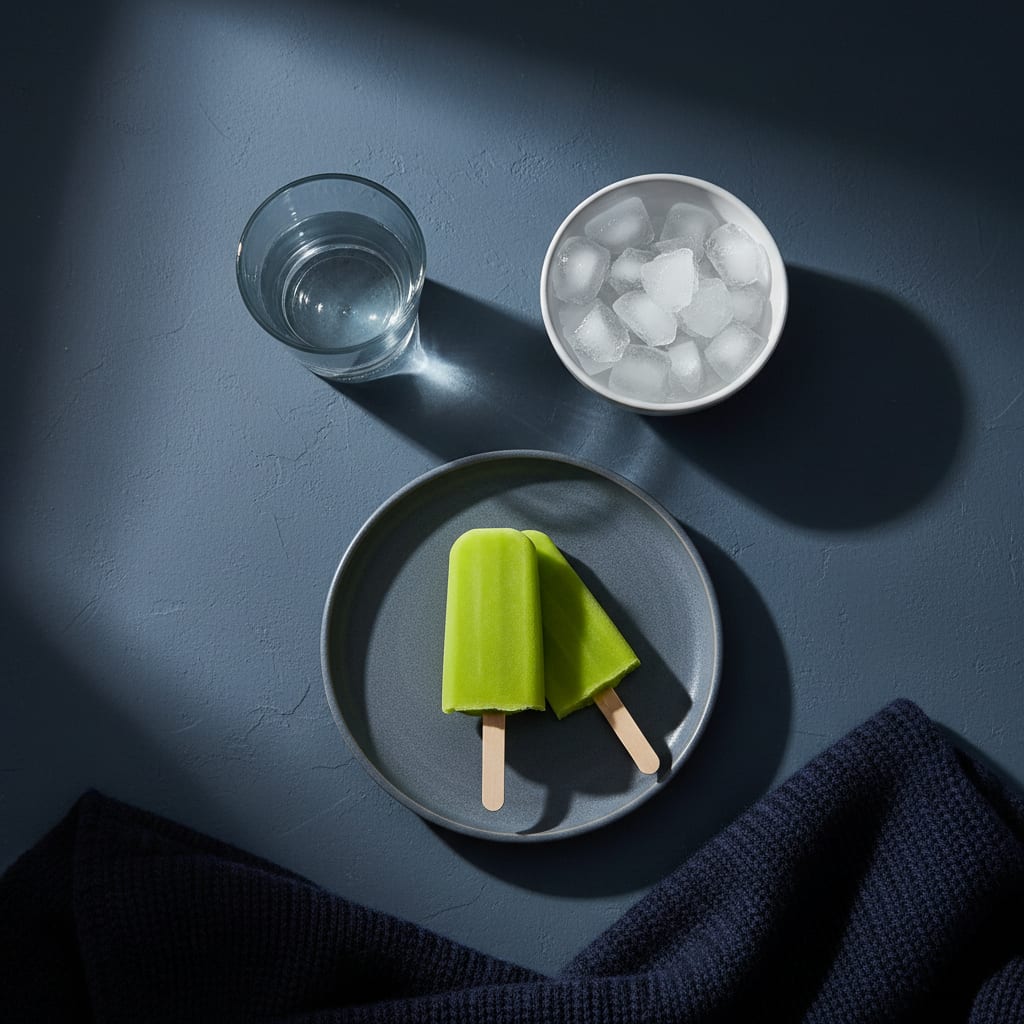
- Cold or soft things. CDC suggests ice chips and popsicles. KidsHealth adds smoothies, soup and other soft foods, and says to skip orange juice, lemonade and other acidic drinks, which can sting. CDC says not to give lozenges to children under 4.
- A clean humidifier. CDC lists running “a clean humidifier or cool-mist vaporizer.” Cool mist means no hot water by the bed. Something like the Honeywell MistMate cool-mist humidifier is a typical small-room size. Betteroo’s buying guide covers why cool mist is the usual pick and how often to clean one. It’s honest that a humidifier is a comfort tool, not a treatment. If you can’t clean it daily, leave it in the closet.
- Pain and fever medicine, only on your pediatrician’s say-so. Ask the nurse line which medicine and how much for your child’s weight. Don’t guess at 2am. KidsHealth warns never to give aspirin to anyone under 18.
- Their own cup, their own spoon. KidsHealth says to keep a sick child’s dishes and cups separate and wash them in hot, soapy water.
When it can’t wait until morning
CDC’s list of reasons to seek care for a sore throat:
- Difficulty breathing or swallowing
- Excessive drooling in a young child
- Signs of dehydration
- Blood in saliva or phlegm
- Joint swelling and pain, or a rash
- Symptoms that don’t improve within a few days, or get worse
Real trouble breathing is a 911 call, not a nurse-line question. For anything else on that list after hours, call your pediatrician’s after-hours number.
The test: book the first slot
The swab has to happen in person. KidsHealth describes the rapid strep test: a cotton swab at the back of the throat, with results in about five minutes. If it’s negative, the office may send a throat culture to a lab, and those results usually come back within a couple of days.
For a solo parent, this sets the day. Call when the office opens and ask for the earliest in-office appointment. A positive rapid test means antibiotics can start that morning, and the back-to-school clock starts with the first dose.
The antibiotic course: the part that crosses houses
KidsHealth says doctors usually prescribe about 10 days of antibiotics. Kids should keep taking them “as prescribed” even after they feel better. Stopping early can leave bacteria in the throat, let symptoms come back, and risk complications such as rheumatic fever.
Ten days is longer than most custody blocks. On a 2-2-3 or week-on/week-off schedule, the course will almost certainly cross a handoff. So:
- Send the medicine with your child, plus the pharmacy’s dosing instructions.
- Text the other house the facts: the diagnosis, when the course started, the last dose time, and the day it ends.
- Keep it short and factual. The schedule-change scripts work as written.
A missed dose at the other house is a reason to call the pharmacist, not to argue.
KidsHealth also says to give your child a new toothbrush once treatment has started and they’re no longer contagious.
The back-to-school math (and telling work)
Three sources, loaded today, frame the earliest return slightly differently:
- AAP (HealthyChildren): back to school or child care “once they’ve had two doses of a course of an appropriate antibiotic 12 hours apart without fever.”
- KidsHealth: most kids can go back “when they’ve taken antibiotics for at least 12 hours and no longer have a fever.”
- New Jersey Department of Health school and child care flyer (February 2026): at least 12 hours after starting antibiotics, and well enough for normal activities, and “fever-free for 24 hours without using fever-reducing medications.”
That last condition is the one that costs a solo parent a day. A 24-hours-fever-free rule means a fever reducer given that morning doesn’t count. Read your own school’s or daycare’s illness policy tonight, because theirs is the rule that applies. Here’s an illustrative week:
| Morning test, first dose same day, last fever that afternoon | |
|---|---|
| 12-hour rule, no fever | Back the next morning |
| 24-hour fever-free rule, no fever reducer | Back the morning after next |
Tell your manager on day one, and give a range. “My child has strep. I’m out today, and possibly tomorrow, depending on the fever” is more useful than a surprise second call. Then set up the backup: one specific person, one specific day. The sick-day plan has the wording. If you do shifts, the on-call nights plan covers who holds the kids when you can’t trade out.
Then assume you’re next
CDC notes that group A strep often spreads within households, and KidsHealth says people can pass it on for a few days before they feel sick. In a one-adult house, a second case lands on the only adult on duty. If you get a fast sore throat with a fever, get yourself tested too. Don’t tough it out on the theory that it’s the same cold.

FAQ: strep throat with one adult in the house
Can strep throat go away without antibiotics? KidsHealth says it can clear on its own after about a week. Antibiotics help a child feel better faster, stop the spread to others, and prevent complications. That’s why a positive test gets treated.
How long is my child contagious once antibiotics start? KidsHealth says that within about 12 hours of starting antibiotics, a child probably won’t have a fever and won’t be contagious. Untreated, a child can stay contagious for up to three weeks.
Can my toddler have strep? It’s very uncommon under 3, according to KidsHealth. Doctors usually don’t test babies and toddlers for it. A toddler with a sore throat and a runny nose usually has a virus. Call your pediatrician about any fever that worries you.
Is a negative rapid test the final answer? Not always. KidsHealth says a negative rapid test is usually followed by a throat culture, with results in a couple of days. Ask the office how they’ll tell you the result.