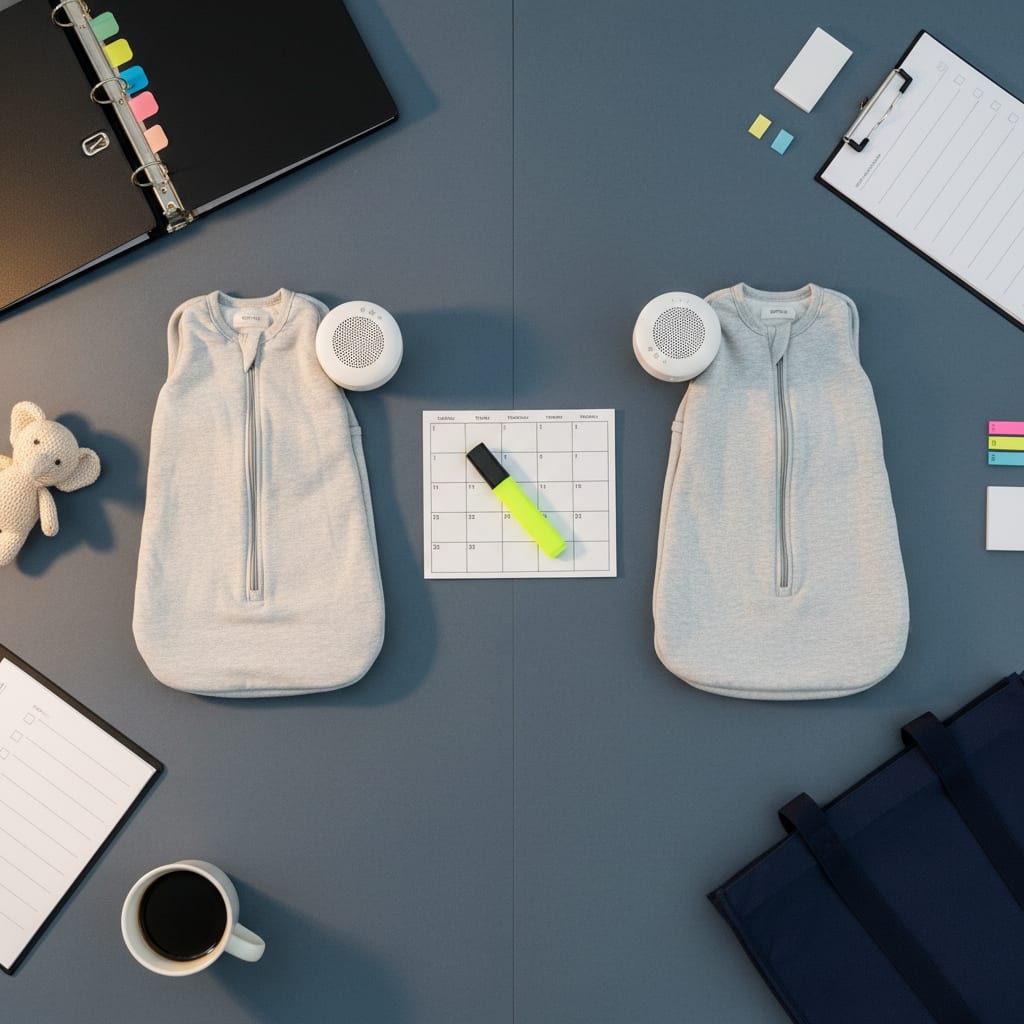
Sleep Training a Second Baby With a Toddler in the Next Room
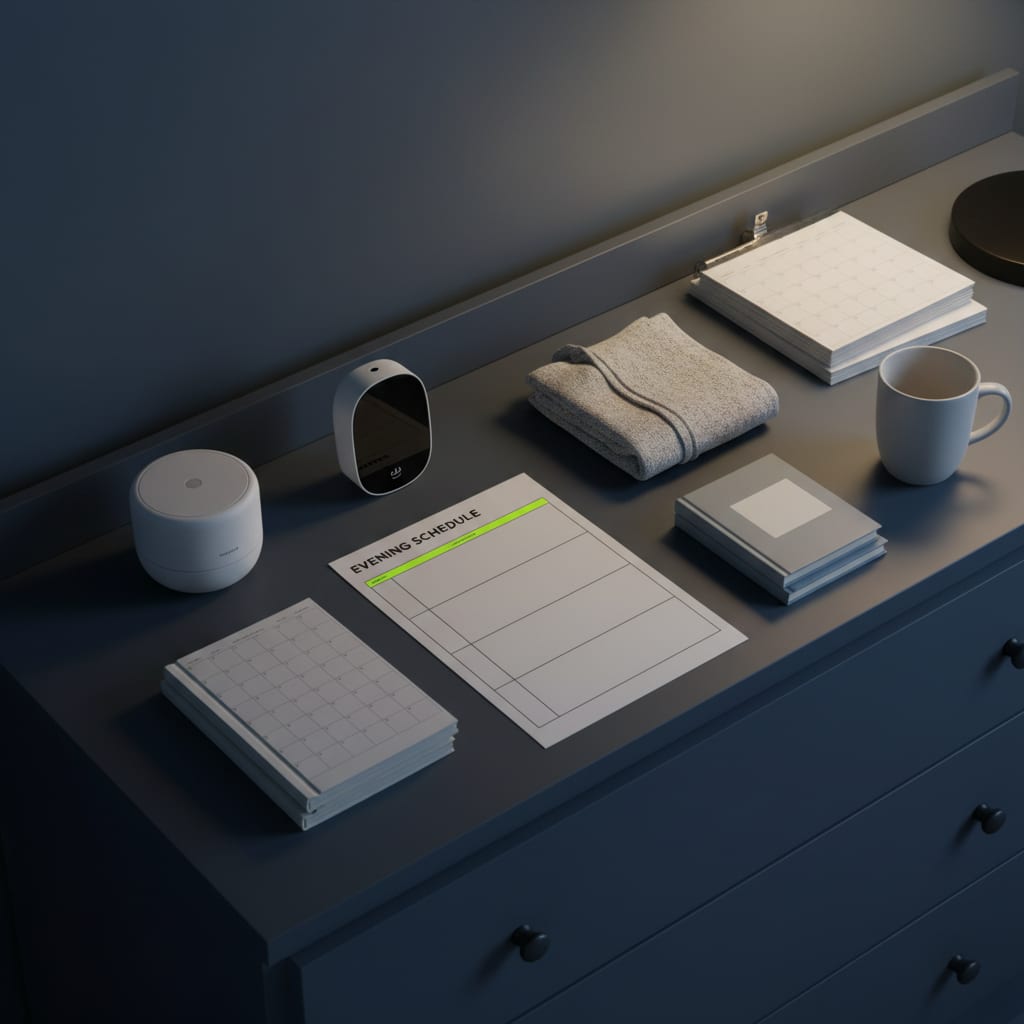
Sleep training a second baby with a toddler in the next room comes down to three moves: stagger the bedtimes so you’re never running two routines at once, manage sound in both directions with white noise in each room, and brief the toddler like a coworker so crying doesn’t read as emergency. It’s genuinely doable solo — thousands of one-parent households do it — but it’s a logistics problem before it’s a sleep problem, because there’s exactly one of you and the whole two-kid internet assumes a second adult is covering the toddler’s bedtime. This is the version of the plan with no backup shift built in.
The math problem: one parent, two bedtimes
With two adults, baby-plus-toddler bedtime is zone defense. Solo, it’s a scheduling puzzle: if both kids hit tired at 7:30, someone waits — and a waiting overtired baby is exactly the baby who fights sleep training hardest. So the fix happens on paper before it happens in the hallway:
- Stagger by 30–45 minutes. Baby first, toddler second, is the default that works for most solo parents: start the baby’s wind-down around 6:45, crib by 7:15, then run the toddler’s routine while checking on the baby at your chosen intervals. Toddler-first works too if your toddler falls asleep fast — pick based on which kid can actually wait, not on which order feels fair.
- Anchor the toddler with something autonomous. The 30 minutes the baby needs is quiet-bin time for the toddler: a special basket of books and low-drama toys that only exists during baby’s bedtime. Screen time on training week is not a moral failure; it’s staffing.
- Protect the baby’s schedule during the day. Wake windows drive bedtime, and a baby whose last nap collided with school pickup melts down at 7. This is where the split-nights math applies to your evening too — daytime schedule is the lever, the 7pm hour is the symptom.
Getting two kids’ schedules to not collide is honestly the hardest part, and it’s arithmetic more than parenting. Betteroo is the tool I’d point a solo parent at for this piece: it’s a personalized baby-and-toddler sleep app that builds each kid’s day — nap windows, wind-down time, bedtime — and adapts the plan as they grow, which for a second-time parent means you can schedule both kids so the baby’s crib time lands before the toddler’s routine instead of on top of it. It runs around $20 a month; a tool, not magic — it hands you a plan that fits your evening, and you still run the hallway.
Sound management: two rooms, one thin wall
You can’t make a sleep-training baby silent. You can make the crying matter less:
- White noise in both rooms — a machine like the Yogasleep Dohm in the baby’s room as a sleep cue, in the toddler’s room as a sound blanket. A box fan does the job if a second sound machine isn’t in the budget. Keep any machine at a reasonable volume and across the room from the crib, not against it.
- Rearrange the geography if you can. Even moving the toddler’s bed to the far wall buys decibels. If rooms flank each other, the closet wall between them is free insulation.
- Accept imperfect. Some nights the toddler will hear the baby. The goal isn’t zero sound; it’s a toddler who isn’t alarmed by the sound — which is a briefing problem, not an acoustics problem.
The toddler briefing (do this at dinner, days one through three): “The baby is learning to fall asleep in her crib, like you learned. Babies sometimes cry while they learn. Mama is right here and everything is okay. Your job is to stay cozy in your bed, and at breakfast you can tell me how it went.” Toddlers handle almost anything they’ve been pre-briefed on and handle almost nothing sprung on them at 11pm. A tiny reward for staying in bed during training week is legal tender in this house.
The week-one plan
- Days 1–2 are the loud ones. Start on a Friday if you work Monday–Friday — you want the roughest nights before a weekend morning. Run the baby’s routine identically both nights, use whatever check-interval method you and your pediatrician have settled on, and hold the toddler’s routine steady even if it runs late.
- Days 3–4, protect consistency ruthlessly. This is where solo parents crack — not from the crying, but from running two bedtimes alone on four days of broken sleep. Lower every other standard: cereal dinner, paper plates, screens. The only job this week is the same routine at the same time.
- Days 5–7, most babies turn the corner. Crying typically shortens night over night; if night five looks like night one, something in the schedule (usually the last nap or an undertired bedtime) needs adjusting — recheck the day plan before abandoning the method.
- Nights still split between kids? If the toddler starts night-waking because of the disruption, park a mattress-side “camping spot” in your room as a temporary, boring option — and know it’s a training-week measure, not the new normal. Two homes’ worth of this coordination is its own post: the two-homes bedtime system.
Safety, non-negotiable and unchanged by sibling logistics: baby on their back, in a bare crib — no blankets, pillows, or bumpers — for every sleep. And the method question itself (which approach, what age, whether your baby’s ready) is a conversation for your pediatrician; this post is the logistics wrapper around whatever plan you two pick.

Balanced verdict, house policy as always: an app can sequence your evening and adapt the schedule as both kids grow; it cannot sit in the hallway at 7:40 while one kid cries and the other requests a fourth glass of water. That part is you. What a good schedule buys a solo parent is fewer nights where both kids need you at the same moment — and with one parent on shift, that’s the whole game.
FAQ: sleep training with a toddler in the house
Will sleep training the baby wake up my toddler?
Sometimes, especially nights one and two. White noise in the toddler’s room, a pre-briefing so crying isn’t scary, and a small stay-in-bed incentive get most toddlers through it. Toddlers who do wake usually resettle fast once the novelty wears off.
Who goes to bed first, the baby or the toddler?
Baby first works for most solo parents — babies usually need the earlier bedtime, and a toddler can wait 30 minutes with a quiet-time bin far better than an overtired baby can. Flip it only if your toddler falls asleep quickly and your baby’s schedule genuinely runs later.
Can I sleep train as a single parent with no help?
Yes — the method itself is one-adult work. The solo-specific challenges are scheduling (staggered bedtimes so routines don’t overlap) and stamina (start on a weekend, lower every other standard for a week). If a relative or friend can take the toddler for night one, take the offer, but don’t wait for help that isn’t coming.
What if both kids end up crying at once?
Triage calmly: settle the toddler with a brief, boring return-to-bed, then resume the baby’s plan — a minute’s delay doesn’t undo training. If simultaneous meltdowns happen nightly, the bedtimes are too close together; widen the stagger before blaming the method, and run the schedule question past your pediatrician if you’re unsure what the baby’s day should look like.