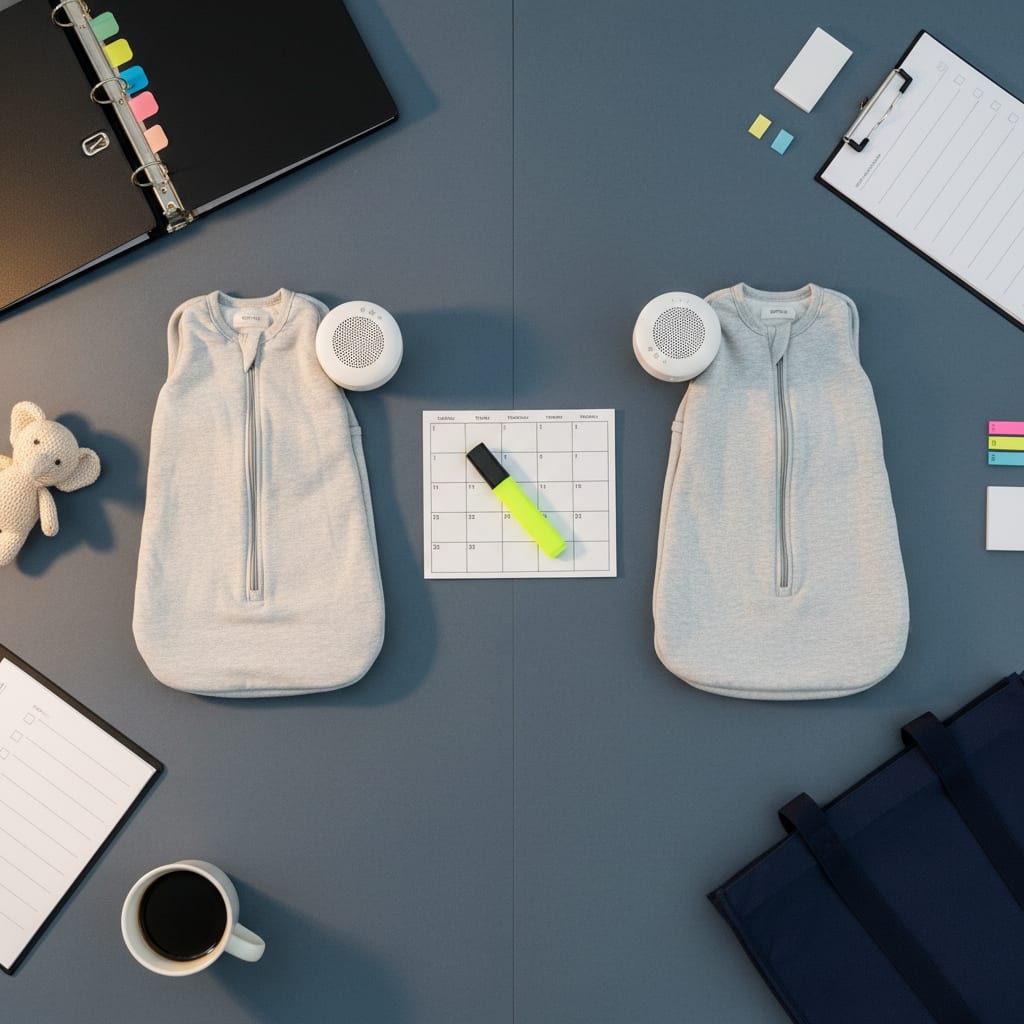
Respite Care and Bedtime: Handing Over the Routine
When your child sleeps somewhere else for a night or a week, the routine you have built does not travel intact — and trying to make it travel intact is what usually goes wrong. What transfers is the sequence, the clock times and one or two objects. What does not transfer is you, the room, and any step that works only because you are the one doing it. So shorten the routine to the parts another adult can genuinely run, put those on one page, and plan for the night they come home, which is reliably harder than the nights away.
Families reach short-break care by very different routes — a disability or health service, a kinship or foster arrangement, a paid sitter, a relative who takes the children one weekend a month. The federal Lifespan Respite Care Program describes respite as care that “can be both planned and emergency-based… to temporarily relieve the family caregivers,” across “all age groups, disabilities, and chronic conditions”; the ARCH National Respite Network runs a locator and state listings, and 211 is the other free front door. None of it changes the bedtime problem: somebody who is not you has to get your child to sleep.
What transfers, and what doesn’t
A bedtime routine has three layers, and they survive a handover very differently.
The sequence transfers well. Bath, pajamas, two books, lights out, in that order at that time. Order and timing are portable because they are information.
The environment transfers partly. Darkness, a steady sound floor and a familiar object travel anywhere. The bed, the smell of the room and the light under the door do not.
You do not transfer at all. The five minutes on the floor with a hand through the crib bars, the way you say the last sentence, the negotiation your child only tries on you — none of it. A routine leaning on those fails on night one elsewhere, and the failure gets read as the child was upset when a step was simply undeliverable.
So audit the routine before handing it over. If a step needs you specifically, cut it or replace it with something an unfamiliar adult can do identically. A twelve-step bedtime is a dependency; a five-step bedtime is a routine.
The one page that travels with them
One page, printed, in the bag — not a text thread, and not a doorstep conversation with a carer managing two other children.
- Wake time and bedtime as clock times, not “early” or “usual”
- The sequence, in five or six lines, in order
- The exact sentence you say at lights-out, word for word
- What the child does if they wake, and what you would like the adult to do
- Naps: whether there is one, and the latest acceptable end time
- The comfort object, where it lives, and where the spare is
- What the child has been told about being there, so nobody contradicts you
- Allergies, medications and doses, the pediatrician’s number, and written consent to seek treatment — ask the placing agency or the pediatrician’s office what they want on it
- Two numbers that reach you, and who to call if neither does
- The one thing that may be dropped. Name it yourself: the bath, the second book, the exact pajamas. Unnamed, everything looks equally required, and an adult who cannot deliver all of it may abandon the whole sequence.
That last line separates this from an emergency handover. The four-minute card for an unplanned night out is for someone arriving at 10pm to a sleeping house; this one must survive a tired adult reading it on the second evening in their own home. If you run a shared plan with a co-parent, the one plan across two houses sheet needs the respite lines added, not a second document.
Objects carry more than instructions
The most reliable thing you can send is a physical object that means sleep: a specific blanket, a soft toy, the same sound machine (a Dohm), the same story. Objects work because a child need not remember or understand them.
Two rules make this hold. Buy the duplicate now — a comfort object with no twin is a crisis waiting for a specific Tuesday, and worse away from home, where nothing else is familiar. And keep the last ten minutes identical wherever they sleep: if the same three stories close every night, a substitute adult can reproduce the closing exactly, which is what a child is tracking. Betteroo’s guide to choosing bedtime stories that hold a child’s attention helps if yours have drifted into whatever is nearest.
Mornings are worth one object too. A child who gets up when a light changes colour rather than when an adult appears survives a change of house better than any instruction — how an ok-to-wake clock is set and introduced is worth reading a fortnight before a first stay, not the night before.
Telling your child before they go
In daylight, in plain words, more than once. Name the place, name the person, and say when you are coming back in units your child uses — after two sleeps beats on Thursday for anyone under about six. Say plainly that you are coming back.
And do not leave without saying goodbye, however much easier slipping out looks. A goodbye costs five hard minutes; a disappearance costs the next three stays. Use the same sentence every time, so it becomes the thing that repeats rather than the thing that gets explained.

The first night, and what the report back is worth
Expect it to be worse than home. A new room, a new adult and a different sound floor would cost an adult a night’s sleep too. One bad night away is not evidence that your child cannot cope, or that the routine is wrong.
Treat the report back carefully in both directions. “She was fine” often means she was quiet; “he was up for two hours” often includes forty minutes of an adult sitting in the dark. Ask three specific questions — what time did lights go out, what did they do when he woke, how long was he awake — and you get something usable. Above all, do not change your home plan on one respite night.
The night they come back is the one to plan for
Re-entry is the predictable hard part and almost nobody plans for it. Children come home unsettled, clingy, wired or flat, and it shows up at bedtime, not at the door.
Hold the schedule exactly. Same wake time, same bedtime, same sequence on the first night back — familiarity does more than a special evening would. Resist catching-up: a late film and a treat dinner make an already-disrupted night longer. Start nothing new for a week, however tempting it is to fix something the stay exposed. Expect one or two rough nights, then baseline; still rough after a week is worth raising with the carer, and a pattern after every stay with your pediatrician.
For you, the harder discipline is using the break for what it is for. Solo parents reliably spend respite hours on admin and hand the child back a system that is still exhausted — the burnout version of a false economy. Decide beforehand what the hours are for and put sleep in the first block. Arranging cover at all, repeatedly and in advance, is village work.
FAQ: bedtime in short-break care
Should I ask the carer to match my bedtime exactly? Ask for the clock times and the closing sequence and be flexible about the rest. A carer with three children cannot run three separate bath routines, and an ask that cannot be met tends to get dropped whole rather than in part.
My child sleeps fine there and badly at home. What does that mean? Usually that the other setting has something yours does not — a darker room, an earlier bedtime, less noise, an adult who does not negotiate. Ask what they actually do, in order, and copy the mechanics rather than concluding anything about your child or yourself.
What if my child refuses to sleep there at all? Ask the carer to hold the sequence and the times and to stop trying new tactics after the second attempt — an escalating series of novel approaches unsettles more than a boring repeated one. Debrief afterwards rather than during, and treat the second stay as a fresh attempt, not a test the first one failed.