Child Hit Their Head Before Bed? When They Can Sleep
Yes, a child who bumped their head can usually go to sleep. The American Academy of Pediatrics says plainly that “it is okay for your child to go to sleep.” What matters is what happens first. Call 911 if they were knocked out, had a seizure, are hard to wake, are confused, can’t walk steadily, or have blood or clear fluid coming from the nose or ears. For anything more than a light bump, call the pediatrician tonight. Otherwise, use a cold pack, watch them closely for two hours, sleep in their room, and ask the nurse line about wake checks.
Every source linked here was loaded and read on October 19, 2026. This is a plan for a one-adult house, not medical advice, and your pediatrician’s nurse line outranks it. Nemours KidsHealth puts it directly: “If you think they don’t look or seem right, call your doctor or 911.”
Call 911 now
Three pediatric sources overlap heavily here: the AAP’s head injury page, KidsHealth, and Seattle Children’s head injury guide. Call 911 for:
- Any loss of consciousness. That’s the AAP’s rule.
- A seizure.
- Hard to wake, or unusually sleepy.
- Confusion, slurred speech, or a sudden change in behavior.
- Unsteady walking, or weakness in the arms or legs.
- Blood or clear fluid from the nose or ears.
- Vomiting more than twice, or vomiting that starts hours later (KidsHealth).
- Bleeding that won’t stop.
- A neck that isn’t moving normally. Seattle Children’s says to protect the neck from any movement.
KidsHealth adds: don’t move the child unless they’re somewhere unsafe, and start CPR if they aren’t breathing and you know how. If your child gets worse overnight, the AAP says to call 911.
With only one adult home, this list is the whole decision. Don’t put a sleeping sibling in the car while you watch a child who might seize. Call 911, unlock the front door, and put the sibling’s shoes by it.
Call the pediatrician tonight
The AAP’s rule: “For anything more than a light bump on the head, you should call your child’s doctor.” Seattle Children’s lists these as reasons to call the doctor or get care right away:
- your child is under 1 year old;
- the skin is split open and may need stitches, or a cut still bleeds after 10 minutes of pressure;
- a lump larger than 1 inch, or a dent in the skull;
- a blow from a hard object, or a fall from a dangerous height.
Babies and toddlers get a lower bar. The AAP says its general advice isn’t meant for children under 2, or for children with bleeding disorders or nervous system problems. Its page on head bumps in babies and toddlers says to go to the emergency department right away if an infant can’t be consoled or won’t nurse or eat, or if a child is “not acting like their usual self.” Little ones often can’t tell you how they feel, so their behavior is the signal.
Can they sleep? Yes. The real question is wake checks
The AAP and Seattle Children’s both say a child does not need to be kept awake. The AAP’s babies page calls that “old advice” and adds, “Sleep can help the brain heal.” The sources differ on waking a child during the night:
| Source | Waking a sleeping child |
|---|---|
| AAP head injury page | The doctor “may recommend that you check your child every 2 to 3 hours.” |
| AAP babies and toddlers page | ”No need to periodically wake them up” unless the doctor advises it. |
| Seattle Children’s | Let them sleep, keep them nearby, and wake them after 2 hours of sleep to check they’re alert and know you. Overnight, if you’re worried, wake them once. |
So ask the nurse line one direct question: “Do you want me to wake them tonight, and how often?” Then set alarms for exactly that. The AAP’s version of a check: they wake enough to recognize you, they respond to you, and they move normally. A grumpy “go away, Mom” passes. A child you can’t rouse is a 911 call.
The first two hours
Seattle Children’s care steps for a mild bump, with the AAP’s on top:
- Cold pack for 20 minutes, wrapped in a wet cloth, then repeat in an hour if needed. A soft kids’ gel pack like the Magic Gel kids ice packs stays on a squirming four-year-old better than frozen peas.
- Watch closely for two hours. The AAP says crying from pain or fright “should last no longer than 10 minutes.”
- Clear fluids first, in case they vomit. Seattle Children’s allows a regular diet after 2 hours.
- Ask before any pain medicine. The AAP says to give nothing other than acetaminophen unless the doctor okays it. Seattle Children’s says to wait until 2 hours have passed with no vomiting. Ask the nurse line for the dose.
A big goose egg looks scary, but Seattle Children’s notes the scalp’s large blood supply makes big lumps common after minor bumps.
Tonight, with one adult
The AAP says “you or another responsible adult should stay with your child for the first 24 hours.” In your house, that’s you. Plan for it:
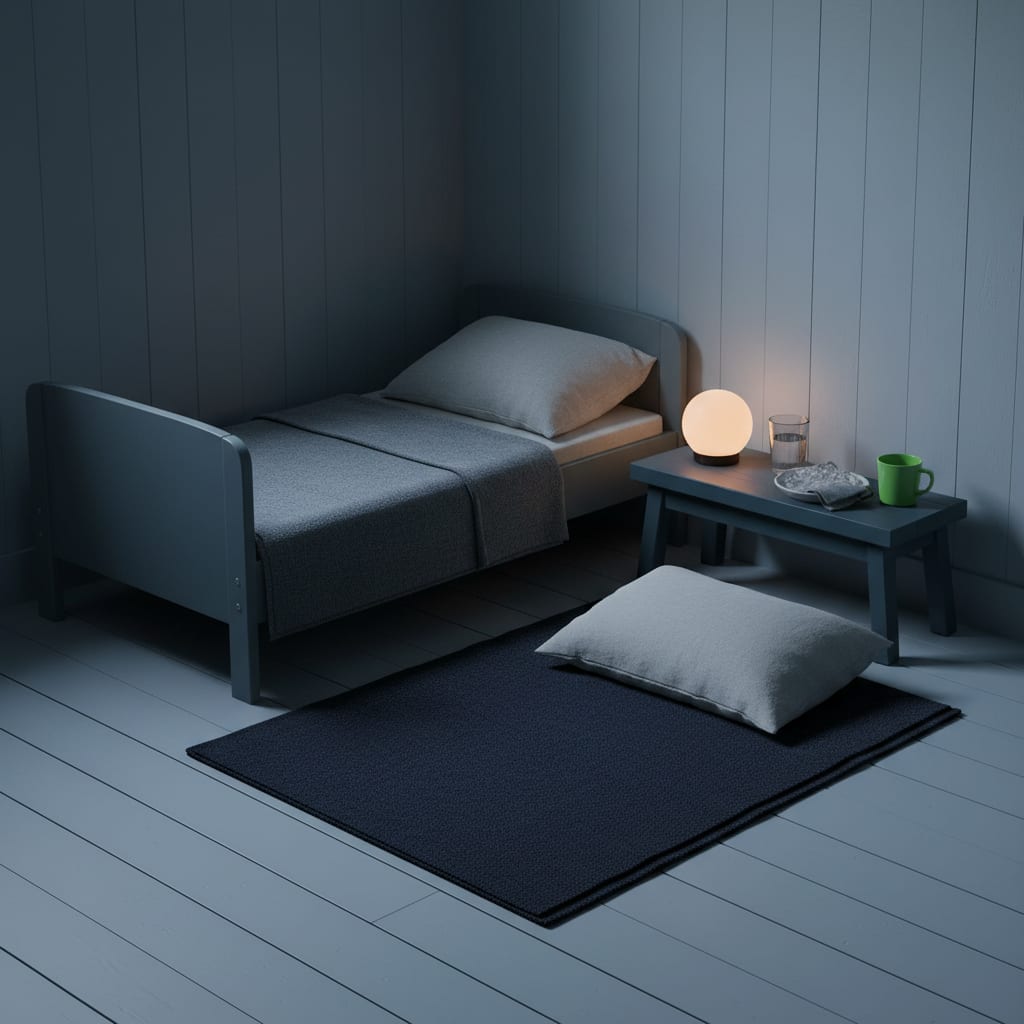
- Sleep in their room. Seattle Children’s main instruction for the first night is to sleep in the same room, so you’ll notice a bad headache, vomiting or confusion. An air mattress and a dim lamp within reach are enough.
- Put the sibling to bed as normal. You need them asleep, not curious.
- Line up your 2am person at 7pm. If the nurse line says “come in,” someone needs to hold the sibling. The on-call nights plan has the call list and the handover.
- Pack the bag before bed: shoes for both kids, your charger, the insurance card.
One warning: a night on their floor can create a toddler who expects you there every night. Seattle Children’s says to return to the normal sleep routine after 24 hours. The walk-back plan gets you out of the room again.
Tomorrow, and the handoff
The AAP says a child “may need to be watched carefully for a few days because there could be a delay in signs of a more serious injury.” If there’s a custody handoff in the next few days, the other house needs your watch list.
Send facts. For example: “She hit her head on the coffee table at 6:50pm Sunday. No knockout. Nurse line said watch at home. Call 911 if she’s hard to wake, confused, vomits more than twice, or can’t walk normally.” The co-parenting scripts keep it short.
What to expect, according to Seattle Children’s: the deep headache usually clears within 24 hours. Pain where the head was hit can last 3 days, and swelling can take a week to go down. A forehead bump can cause a black eye 1 to 3 days later. Call the doctor if a headache lasts more than 24 hours. The AAP’s babies page says a toddler with a concussion may need a few days home from daycare, so give your manager a heads-up early.
If tonight’s bump came from a toddler climbing over the crib rail, it will happen again. Betteroo’s guide covers the crib-climbing signs that mean it’s time for a bigger bed.

FAQ: a head bump at bedtime
Is a big lump worse than a small one? Not by itself, because the scalp bleeds easily. But Seattle Children’s lists swelling larger than 1 inch as a reason to call the doctor now, so measure it.
My baby is under 1. Is anything different? Yes. Seattle Children’s says to call the doctor right away for any head injury under age 1, and the AAP’s general advice isn’t written for children under 2. Call tonight, even for a small-looking bump.
My toddler bangs their head on the crib on purpose at bedtime. Is that the same thing? Usually not. Rhythmic head banging while falling asleep is a common self-soothing habit. Betteroo explains why it happens and when to raise it with your pediatrician. A fall or a blow belongs on the lists above.